What Families Should Know Before Someone Starts a Ship Contract
Prepare for a first contract together with realistic expectations, verified contact details and clear agreements about communication, home responsibilities and changes of plan.
Saving is unavailable in this browser (its storage is turned off or full). Ordinary links and bookmarks still work.View saved
A first ship contract changes routines for the person joining and the people staying home. The most useful preparation is a calm conversation about what is confirmed, what may change and how you will handle ordinary responsibilities while apart.
Understand the arrangement, not the rumours
Ask the seafarer to explain their employer, role, expected contract dates and joining instructions. A cruise brand, hiring partner and legal employer may not be the same organisation. Keep the contact details from verified documents, rather than relying on a message forwarded by an acquaintance.
Daily routines, shore access and internet arrangements depend on the vessel and role. Social-media accounts can show a real moment without showing the whole working week. Avoid building expectations around another person's particular benefits or schedule.
Agree which documents a trusted family member should have access to and how they will be protected. Share only what is needed; a publicly posted passport or contract is not a useful emergency plan.
Make home responsibilities explicit
Discuss who will handle practical tasks: school communication, property appointments, vehicle maintenance or collecting important mail. Keep account permissions and financial arrangements deliberate; never share passwords casually as a shortcut.
Create a brief list of decisions that can wait for a routine conversation and matters that need prompt contact. Each family will draw that line differently. This discussion is about reducing uncertainty, not transferring every responsibility to the person at home.
An illustrative family might agree to collect non-urgent household questions for a weekly call while using a verified company contact if urgent news cannot reach the seafarer directly.
Leave room for adjustment
Agree a flexible communication routine and a backup contact method. A delayed reply may have several explanations; use the agreed plan rather than immediately assuming someone is ignoring you or that an emergency has occurred.
Before promising a homecoming celebration or non-refundable trip, check whether the return arrangements are confirmed. Discuss the first days home too: travel recovery and family expectations do not always line up automatically.
Established seafarer organisations also support families. ISWAN describes its work as supporting both seafarers and their families; support is not restricted to questions about a ship's technical operation.
Try this together: create one private page with verified contacts, communication preferences and essential home arrangements. Revisit it after the first week instead of expecting the original plan to be perfect.
Your next step
Read next

Life at sea
Staying Connected With Family When Internet Access Is Limited
Agree simple contact routines before departure, make useful messages easier to send and avoid turning delayed replies into unnecessary worry for everyone at home.
Life at sea
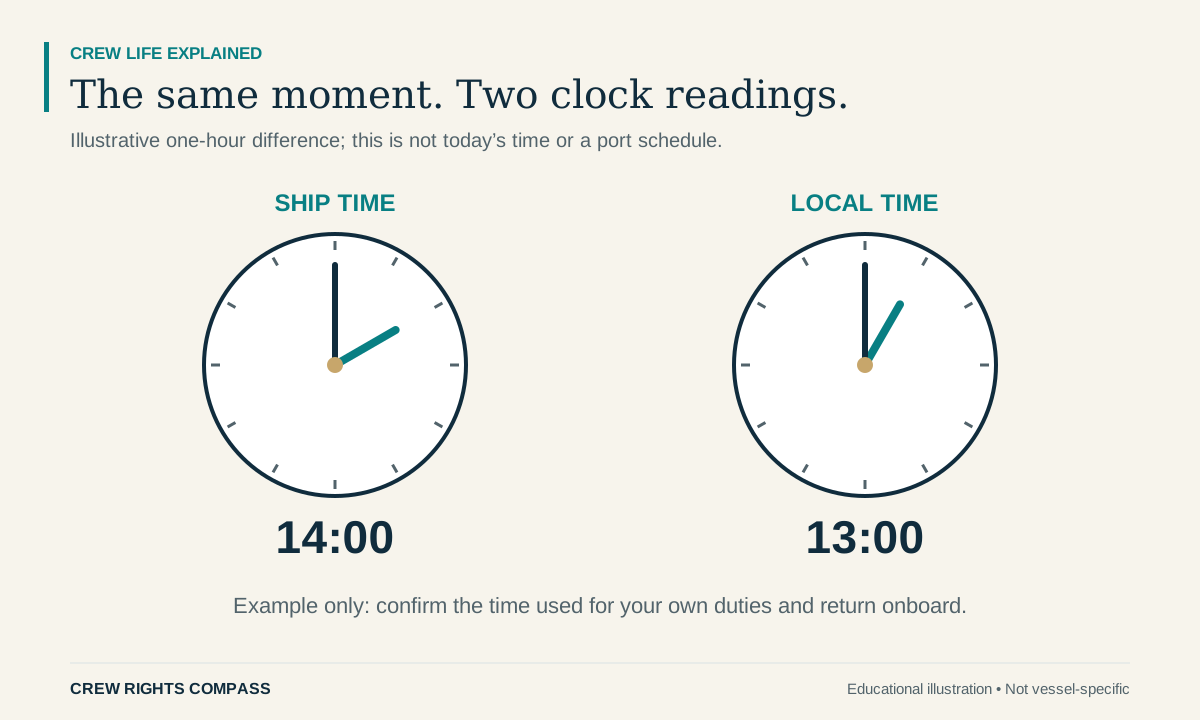
Ship Time vs Local Time: A Small Difference That Can Ruin Your Day
Your phone, the café clock and the ship may disagree. Learn how to confirm the time that controls your return and avoid an unnecessary race.
Sources
- ISWAN — Our work. Confirms that the organisation supports seafarers and their families
- The Mission to Seafarers — Why support seafarers. Context on extended separation from families; no universal contract length or entitlement is inferred
Sources are references, not endorsements. Examples in this article are illustrative and do not describe a particular company, ship or person. Arrangements vary by employer and vessel: your own ship's instructions come first.
Spotted an error or an out-of-date source? Email a correction. Please do not send personal documents or evidence. See our editorial policy.