How the Bridge, Engine Room and Hotel Department Work Together
Navigation, technical systems and guest service meet in everyday decisions. Understanding the handovers helps you see how your own job fits into the whole ship.
Saving is unavailable in this browser (its storage is turned off or full). Ordinary links and bookmarks still work.View saved
A cruise ship works because departments depend on one another. The bridge team, engineering teams and hotel operation have different responsibilities, but a problem rarely stays neatly inside one department. Understanding those connections makes the ship less mysterious—and makes your own reports more useful.
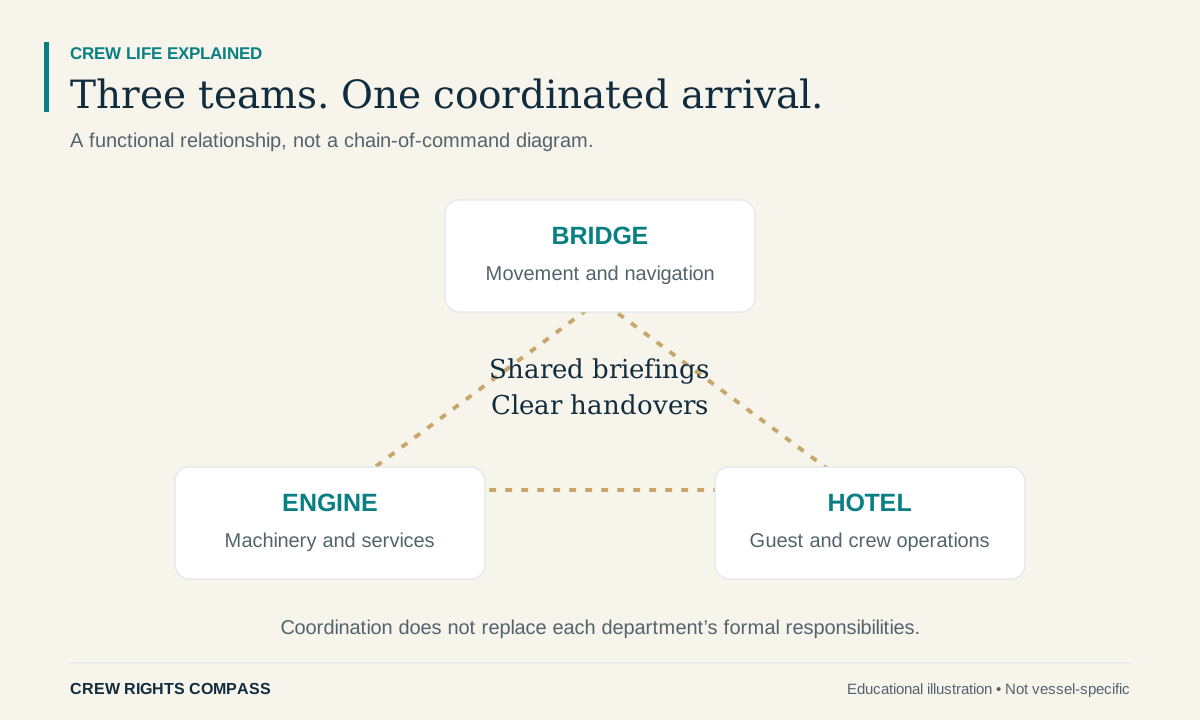
Three teams. One coordinated arrival.
- A functional relationship, not a chain-of-command diagram.
- Bridge: movement and navigation.
- Engine: machinery and services.
- Hotel: guest and crew operations.
- The three are linked by shared briefings and clear handovers.
- Coordination does not replace each department’s formal responsibilities.
Educational illustration; arrangements vary by vessel. Open the full-size diagram: Three teams. One coordinated arrival.
Three teams, connected work
In broad terms, marine teams manage navigation and associated ship operations; technical teams care for machinery and systems; hotel teams deliver accommodation, food and other guest services. Titles, reporting lines and the division of tasks vary by company and vessel.
The hotel department cannot promise a service that depends on an unavailable technical system. Engineers need clear information about where a problem occurs. Changes to arrival plans can affect meals, excursions and housekeeping schedules. None of these connections makes one department an expert in another department’s work.
A useful mental picture is a theatre production: different teams own different tasks, but everyone needs the same version of the running order.
One fault, several handovers
Consider an illustrative example: an accommodation area loses hot water. A crew member receives a complaint, records the location and time, and uses the approved reporting channel. The responsible technical team investigates. The relevant supervisor coordinates service adjustments and tells affected people what has actually been confirmed.
The helpful message is specific: “Cabins in this area reported no hot water at 07:20; these locations are affected.” “The whole system has failed” is a diagnosis the reporter may not be qualified to make.
Public-health work provides another real connection: Carnival’s published public-health role involves cooperation across medical, technical and hotel functions. The exact arrangement elsewhere may differ.
Learn your connection points
During induction, ask who receives faults, who authorises changes and where confirmed updates appear. Learn what needs immediate escalation and what belongs in the routine reporting system.
Pass on facts, distinguish an estimate from a confirmed time, and tell the next person whether an issue is still open. Avoid promising a repair deadline on another team’s behalf.
Takeaway: Good teamwork does not require knowing every technical answer. It requires a clear observation, the right recipient and a reliable handover.
Your next step
Read next
How ships work
What Happens Behind the Scenes When a Ship Arrives in Port?
The coastline appearing is only one part of arrival. Marine teams, port services, authorities and onboard departments coordinate before people or supplies can move.
How ships work
Why Turnaround Day Can Feel Like Three Days in One
One voyage ends while another begins. Follow the overlapping work behind luggage, cabins, supplies and boarding—and learn why small updates can have large effects.
Sources
- Carnival shipboard careers. Broad separation of marine, technical and hotel career areas; department labels are company examples
- Carnival Public Health Officer role. Published example of public-health coordination across medical, technical and hotel functions
Sources are references, not endorsements. Examples in this article are illustrative and do not describe a particular company, ship or person. Arrangements vary by employer and vessel: your own ship's instructions come first.
Spotted an error or an out-of-date source? Email a correction. Please do not send personal documents or evidence. See our editorial policy.