Why Turnaround Day Can Feel Like Three Days in One
One voyage ends while another begins. Follow the overlapping work behind luggage, cabins, supplies and boarding—and learn why small updates can have large effects.
Saving is unavailable in this browser (its storage is turned off or full). Ordinary links and bookmarks still work.View saved
Turnaround day compresses the end of one voyage and the start of the next into a busy window. Guests may see a queue and a terminal. Crew see several connected workstreams, each waiting for information or space from another team.
Not every vessel changes all guests at one port. Partial turnarounds, longer stays and different operating models create different patterns. The useful lesson is coordination, not a universal timetable.
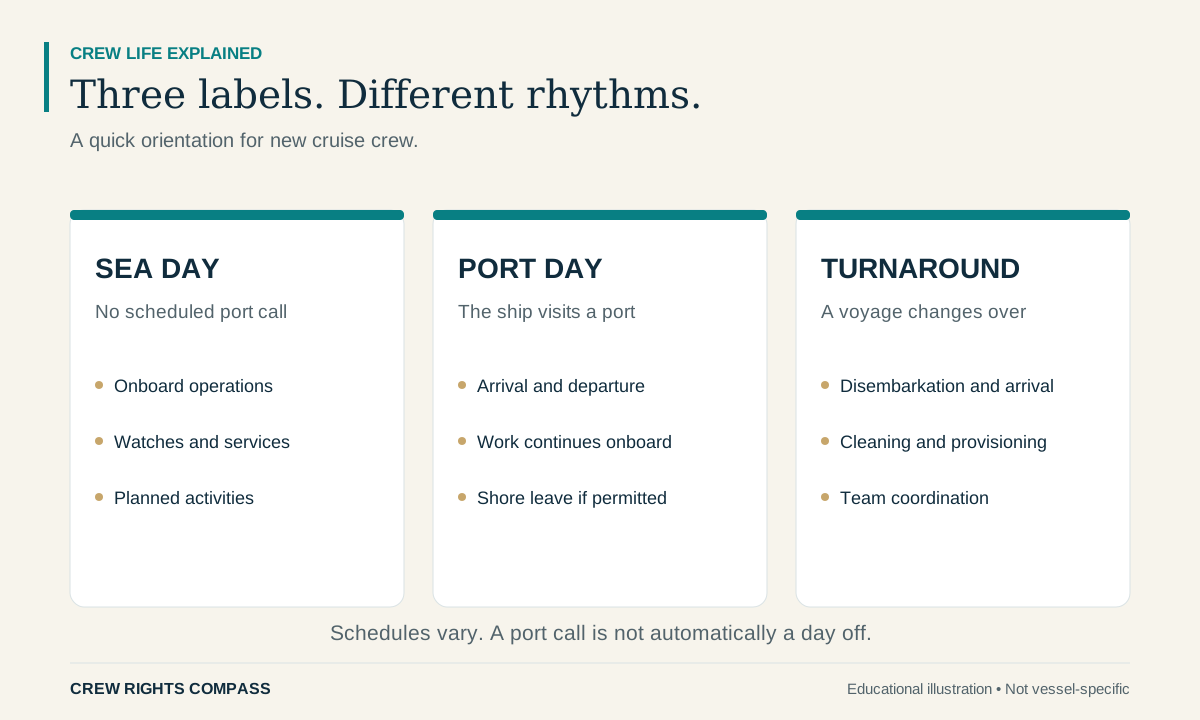
Three labels. Different rhythms.
- Sea day: no scheduled port call; onboard operations, watches and services, planned activities.
- Port day: the ship visits a port; arrival and departure, work continues onboard, shore leave if permitted.
- Turnaround: a voyage changes over; disembarkation and arrival, cleaning and provisioning, team coordination.
- Schedules vary. A port call is not automatically a day off.
Educational illustration; arrangements vary by vessel. Open the full-size diagram: Three labels. Different rhythms.
Several clocks are running
Think of three clocks: departing guests and their belongings, the ship’s readiness, and arriving guests. Cabin preparation, provisions, maintenance opportunities and crew movements may overlap with those clocks.
Shore teams are part of the operation too. Royal Caribbean Group’s published groundhandling arrangements describe terminal assistance and coordination involving port management, security, stevedores, customs and immigration. That is one company’s example of the wider network behind the gangway.
A task can be completed locally while the next stage remains unavailable. A prepared cabin does not mean every boarding requirement has been satisfied. A bus reaching the terminal does not mean its passengers can immediately board.
The knock-on effect of one change
Imagine an illustrative late coach carrying joining guests. Transport teams need an updated arrival estimate. Terminal staff need the same information. Onboard teams may need to adjust their expectations. Rumours produce extra calls without making the coach arrive sooner.
Useful updates say what changed, who is affected and when the next confirmed update is expected. “The coach is delayed; the coordinator is checking its location” is more honest than inventing a ten-minute estimate.
For your own task, ask: What must happen first? Who needs to know when I finish? Where should I report a delay?
Prepare for the overlap
Before a busy day, check the current briefing, your assignment and the handover arrangement. Keep essential contact information available through approved channels. Raise clashes or missing information early with your supervisor.
A tight schedule does not justify bypassing an access control, improvising unfamiliar equipment use or concealing a problem. Use the vessel’s procedures when priorities conflict.
Takeaway: Turnaround works through shared information and clear responsibilities. The best contribution is often a timely, accurate update—not simply moving faster.
Your next step
Read next
Crew language
Turnaround, Sea Day and Port Day: The Crew Version
Cruise itineraries describe where the ship goes. Your work schedule describes what you do. Learn how these three day types fit together without confusing them.
How ships work
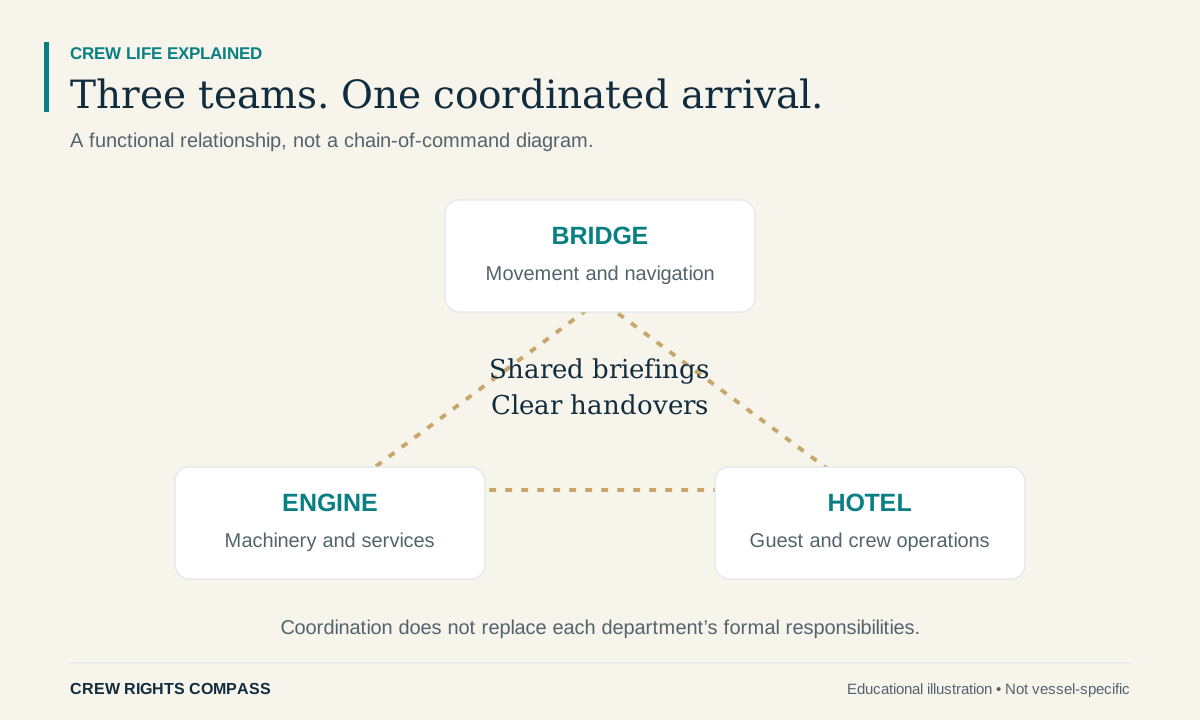
How the Bridge, Engine Room and Hotel Department Work Together
Navigation, technical systems and guest service meet in everyday decisions. Understanding the handovers helps you see how your own job fits into the whole ship.
Sources
- Royal Caribbean Group groundhandler terms. Example of shore-side guest movement, terminal assistance and coordination among multiple port stakeholders
Sources are references, not endorsements. Examples in this article are illustrative and do not describe a particular company, ship or person. Arrangements vary by employer and vessel: your own ship's instructions come first.
Spotted an error or an out-of-date source? Email a correction. Please do not send personal documents or evidence. See our editorial policy.