What Happens Behind the Scenes When a Ship Arrives in Port?
The coastline appearing is only one part of arrival. Marine teams, port services, authorities and onboard departments coordinate before people or supplies can move.
Saving is unavailable in this browser (its storage is turned off or full). Ordinary links and bookmarks still work.View saved
A ship’s arrival is a coordinated operation involving the vessel, port services and relevant authorities. Reaching the harbour—or even being alongside—does not automatically mean that guests, crew, supplies and visitors can all move immediately.
The details depend on the ship, port, voyage and local requirements. There is no single arrival checklist that a general-interest article can safely substitute for the vessel’s procedures.
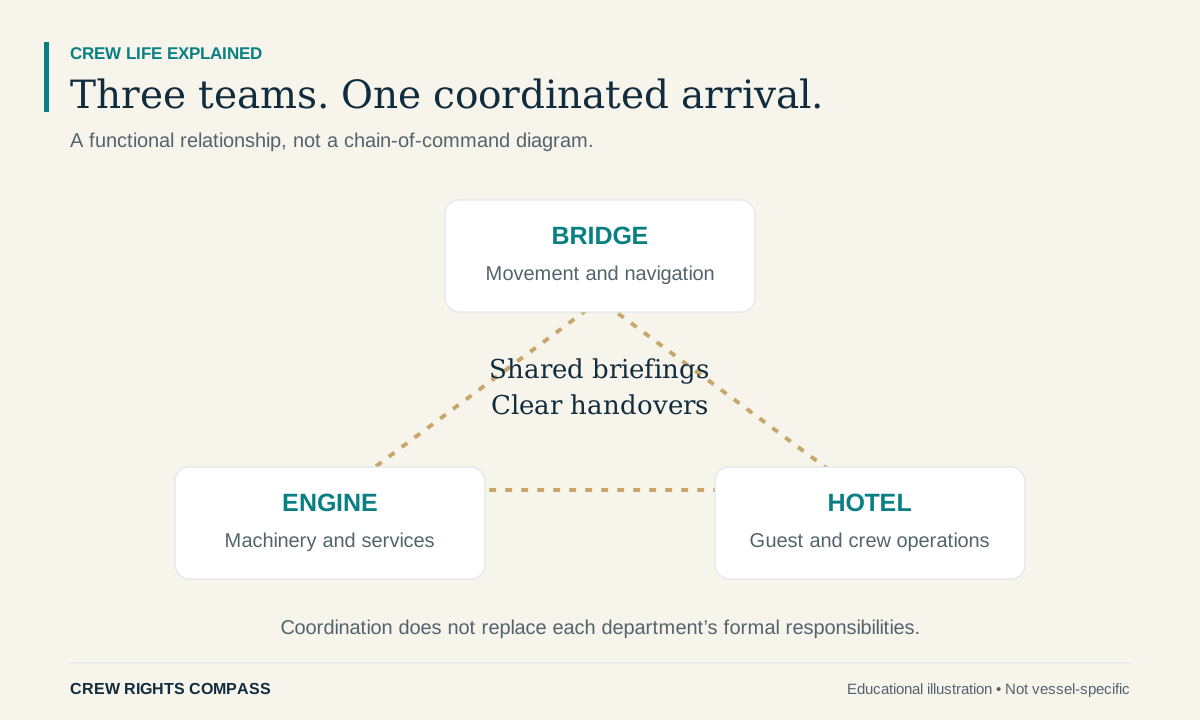
Three teams. One coordinated arrival.
- A functional relationship, not a chain-of-command diagram.
- Bridge: movement and navigation.
- Engine: machinery and services.
- Hotel: guest and crew operations.
- The three are linked by shared briefings and clear handovers.
- Coordination does not replace each department’s formal responsibilities.
Educational illustration; arrangements vary by vessel. Open the full-size diagram: Three teams. One coordinated arrival.
More than reaching a berth
Marine teams coordinate the vessel’s arrival within the applicable port arrangements. A port may have vessel traffic services, pilotage or other local requirements. IMO describes vessel traffic services as supporting safe and efficient traffic while preserving the master’s navigational responsibilities.
Other work concerns permission and practical readiness: the applicable formalities, access arrangements and coordination of services. These workstreams can run alongside each other, but completing one does not automatically complete the rest.
For someone waiting to go ashore, the important information is the ship’s confirmed instruction—not an estimate inferred from what you see out of a window.
The people connecting ship and shore
Port agents can coordinate services between the vessel and local providers or authorities. The exact appointment varies. Royal Caribbean Group’s published agent terms give examples including transport and assistance with particular crew or guest arrangements.
Think of the agent as one connecting point in a larger network, not a person who can override every port decision. Shipboard teams still have their own responsibilities, and authorities retain theirs.
An illustrative example: a delivery vehicle is at the terminal, but the requested supplies are not yet aboard. Access, handling and the ship’s readiness still need coordination. “The truck has arrived” is an update, not proof the delivery is complete.
What crew should confirm
Before making personal plans, check your duty schedule, whether shore leave is permitted and the confirmed return requirements. Ask how changes will be communicated. Different terminals can also have different access and transport arrangements.
Do not treat a visible gangway, an open door or other people leaving as permission for you to leave. Use the arrangements explained by your ship.
Takeaway: Arrival has several milestones. Knowing which one has actually been reached prevents wasted journeys, missed handovers and assumptions about permission.
Your next step
Read next
How ships work
How the Bridge, Engine Room and Hotel Department Work Together
Navigation, technical systems and guest service meet in everyday decisions. Understanding the handovers helps you see how your own job fits into the whole ship.
How ships work
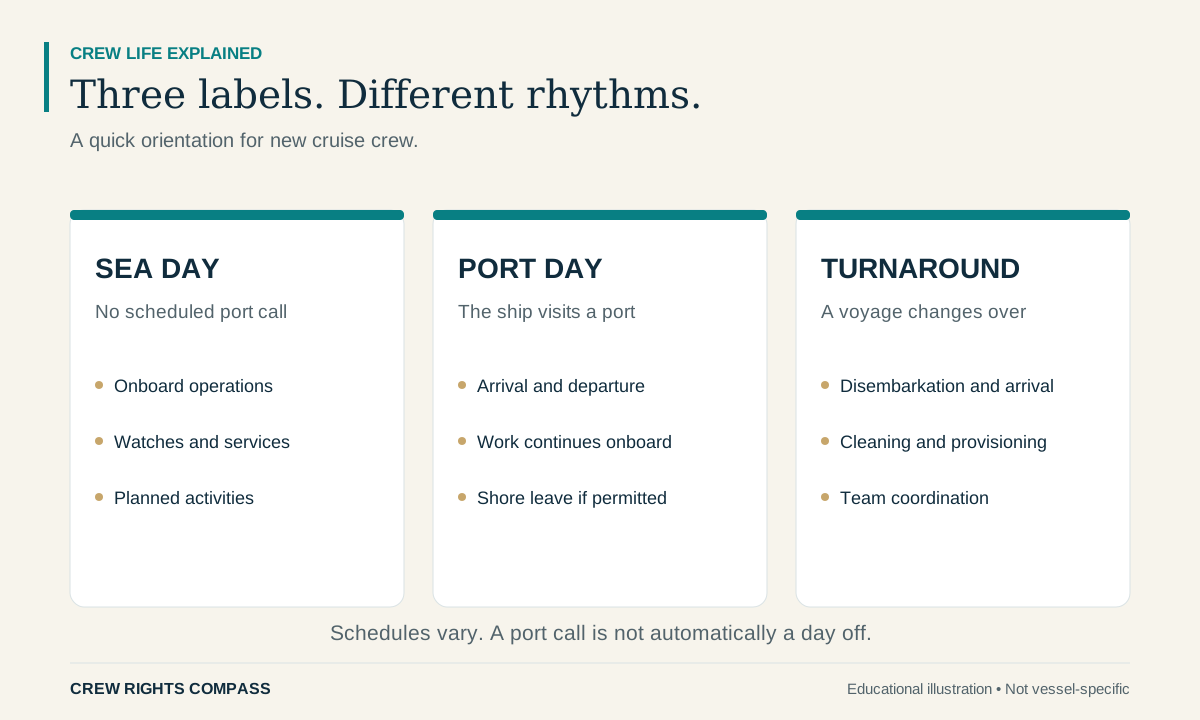
Why Turnaround Day Can Feel Like Three Days in One
One voyage ends while another begins. Follow the overlapping work behind luggage, cabins, supplies and boarding—and learn why small updates can have large effects.
Sources
- IMO Vessel Traffic Services. Purpose of VTS and continued master responsibility; not all ports have identical arrangements
- Royal Caribbean Group port agent agreement. Company example of agents coordinating ship requests, transport and services involving shore providers and authorities
Sources are references, not endorsements. Examples in this article are illustrative and do not describe a particular company, ship or person. Arrangements vary by employer and vessel: your own ship's instructions come first.
Spotted an error or an out-of-date source? Email a correction. Please do not send personal documents or evidence. See our editorial policy.