Cruise, Expedition or Cargo: Which Kind of Ship Life Are You Comparing?
The vessel’s mission changes the work around you, but your role and contract matter just as much. Compare real conditions instead of relying on scenery.
Saving is unavailable in this browser (its storage is turned off or full). Ordinary links and bookmarks still work.View saved
Cruise, expedition and cargo ships exist for different purposes, which shapes the work aboard. But a vessel label does not tell you everything about crew life. Your job, employer, contract, itinerary and the particular ship may matter more than the photograph in a recruitment advert.
The categories also overlap. An expedition vessel carrying holiday guests is still part of passenger shipping; “expedition” does not erase its hotel or technical work.
Start with the ship’s purpose
On a cruise ship, passenger service creates a wide range of accommodation, food, entertainment and support roles alongside marine and technical functions. The scale and mix vary between vessels.
An expedition operation may add activities and specialist personnel associated with its destinations. Seabourn’s expedition information, for example, describes Zodiac outings and landings. That does not mean every crew member joins every outing or has an outdoor job.
A cargo vessel’s commercial purpose centres on transporting cargo. Marine and engineering roles are prominent in Maersk’s seafarer careers information. Ships still require everyday living support; “cargo” should not be read as “no catering or accommodation work.”
Compare the job, not the postcard
Imagine two illustrative offers: a hospitality position on an expedition ship and an engineering position on a large cruise ship. Both involve ships, but their training requirements, daily responsibilities and work environments may be very different.
The destination picture cannot tell you your cabin arrangement, internet access, reporting line or opportunity to go ashore. Smaller does not automatically mean friendlier, and larger does not automatically mean better facilities for your particular role.
Ask for information tied to the actual position and vessel, with important terms in writing. Be cautious about treating one person’s contract as a promise about your own.
Make a useful comparison
Compare duties, required certificates, remuneration, contract length, joining costs, accommodation arrangements and available welfare support. Ask about working patterns and how applicable rest requirements are managed.
For expedition work, clarify whether activities pictured in the advert are guest experiences, assigned work or something crew may occasionally access. For any ship, distinguish a recruitment description from a contractual commitment.
Takeaway: Choose between documented jobs and conditions, not imagined lifestyles. The best comparison starts with what you will actually be employed to do.
Your next step
Read next
How ships work
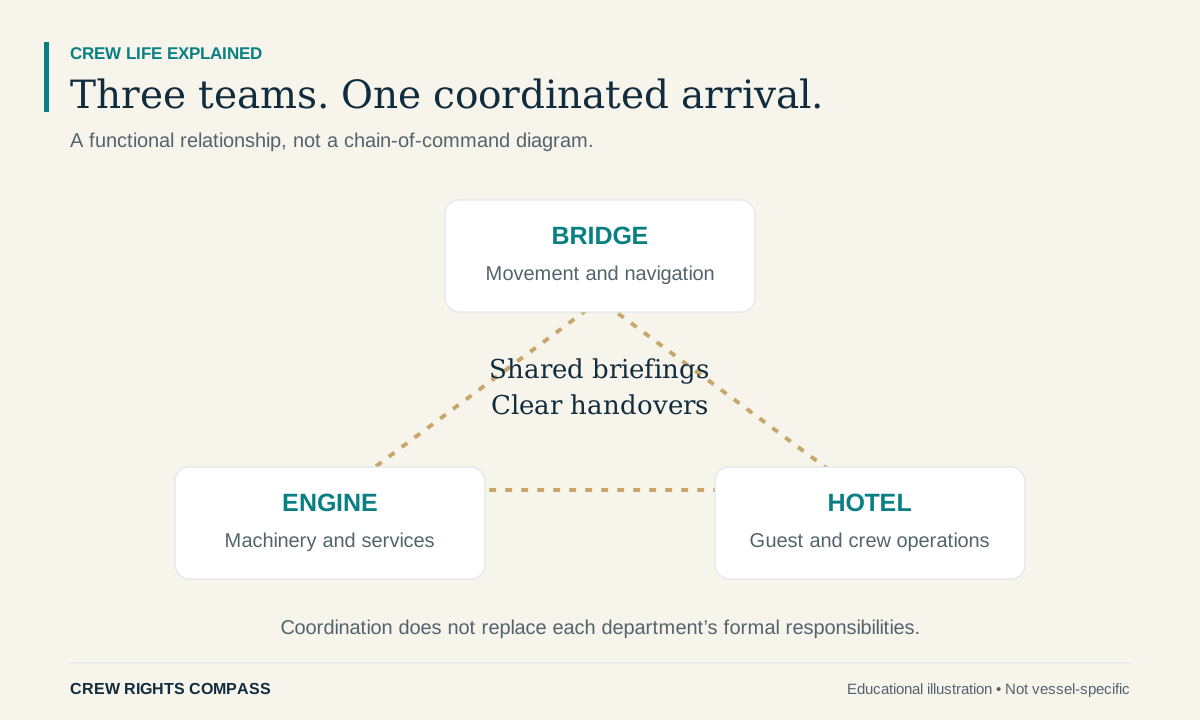
How the Bridge, Engine Room and Hotel Department Work Together
Navigation, technical systems and guest service meet in everyday decisions. Understanding the handovers helps you see how your own job fits into the whole ship.
How ships work
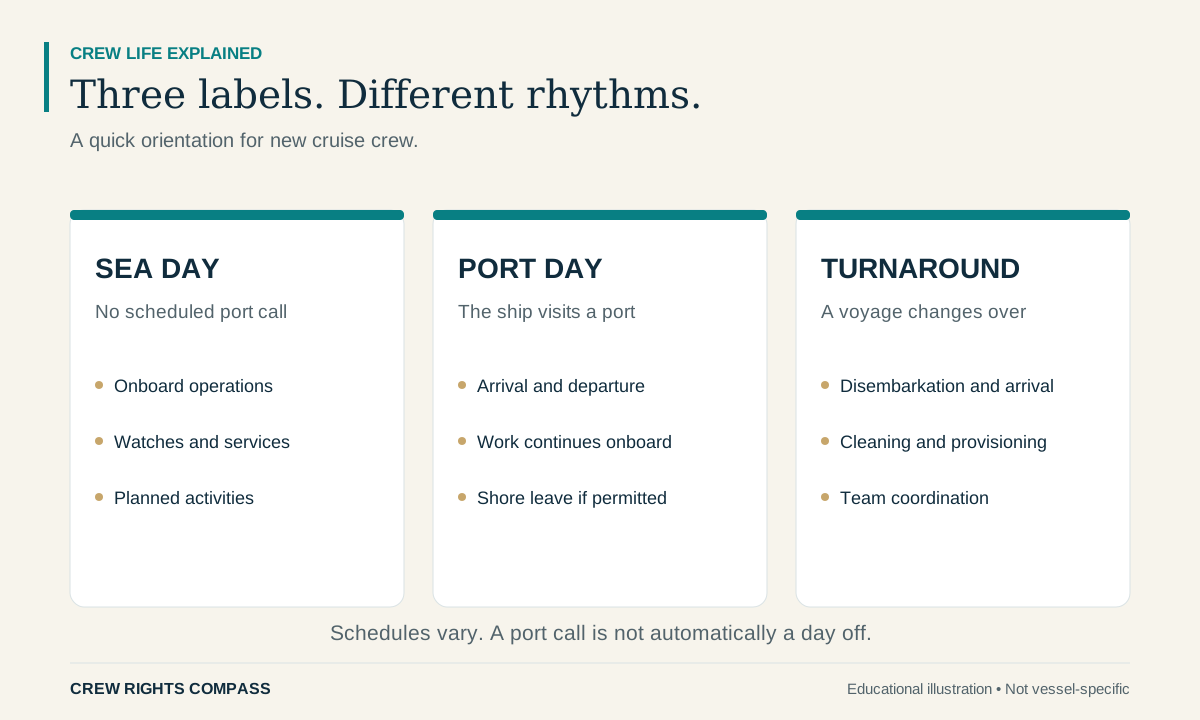
Why Turnaround Day Can Feel Like Three Days in One
One voyage ends while another begins. Follow the overlapping work behind luggage, cabins, supplies and boarding—and learn why small updates can have large effects.
Sources
- Carnival shipboard careers. Passenger-vessel example showing hotel, marine and technical career areas; used only for broad role distinctions
- Seabourn expedition excursion information. Operator example of Zodiac outings and landings; not a promise of crew participation
- Maersk seafarer careers. Cargo-shipping career example with marine and engineering pathways
Sources are references, not endorsements. Examples in this article are illustrative and do not describe a particular company, ship or person. Arrangements vary by employer and vessel: your own ship's instructions come first.
Spotted an error or an out-of-date source? Email a correction. Please do not send personal documents or evidence. See our editorial policy.