What Does an Electro-Technical Officer Do at Sea?
An ETO works with the electrical and electronic systems that keep a ship operating. Explore the role, its boundaries and sensible questions before training or applying.
Saving is unavailable in this browser (its storage is turned off or full). Ordinary links and bookmarks still work.View saved
An electro-technical officer, or ETO, works with a ship's electrical, electronic and control systems. The role combines technical knowledge with disciplined fault-finding. It is a maritime position with specific competency requirements, rather than a general invitation to fix anything with a screen.
Systems, signals and reliable operation
The work can involve power distribution, motors, automation, monitoring and control equipment. The precise equipment list depends on the vessel and how the employer divides responsibility between ETOs, electricians, engineers, IT and specialist contractors.
That boundary is worth checking. A cabin's internet problem, a failed stage light and a machinery-control fault may look like electrical problems to a passenger, but they can belong to different teams.
The UK MCA maintains a dedicated ETO certification route under STCW regulation III/6. Its guidance includes routes for trainees and people entering with relevant electrical experience. A shoreside qualification should not be assumed to provide automatic permission to serve as a certificated ETO. UK applicants should also check current MCA syllabus and transition guidance with an approved training provider.
A useful fault report beats a confident guess
Imagine a system displaying an intermittent alarm. A helpful report records when it appeared, the equipment involved and any relevant observations. It does not invent a diagnosis or conceal that the fault disappeared before anyone arrived.
For applicants, prepare an example of structured troubleshooting: how you gathered evidence, worked within authorisation, consulted drawings and documented the result. Use a safe example from your own training or work, without exposing confidential system information.
This is career orientation, not electrical instruction. Isolation, high-voltage work and testing require the vessel's procedures, training and authorisation. A blog cannot establish that equipment is safe to touch.
Questions before joining
- Which systems fall within the job, and which belong to IT or entertainment technicians?
- What vessel-specific familiarisation and supervised handover will I receive?
- Is there shore-based technical support, and how is it contacted?
- How are spare parts, drawings and maintenance records managed?
- Which certificate, endorsement and equipment-specific training must I already hold?
- What is the duty arrangement, including call-outs and recorded rest?
Ask for written answers when choosing between offers. The best match is a role whose equipment, support and responsibility fit your demonstrated competence, with a clear route for learning what is new.
Your next step
Read next
Roles onboard
Cruise Ship Ranks and Hierarchy Explained: Who Reports to Whom?
Understand the main onboard teams, find your reporting line and learn why your everyday supervisor may be different from the person directing an emergency.
Roles onboard
Cruise Ship Departments Explained: Finding the Right Role for You
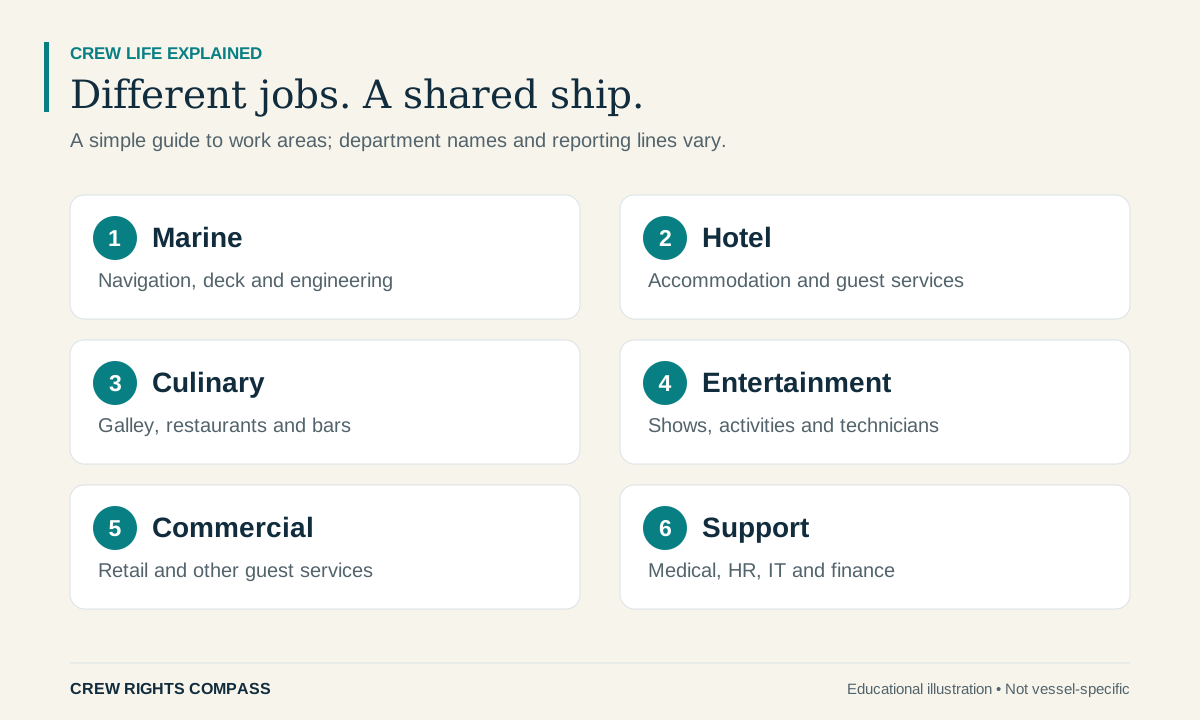
From navigation and engineering to hospitality, entertainment and medical work, compare the main onboard teams by their work rather than the glamour of a title.
Sources
- MCA: UK requirements for electro-technical officers. Dedicated ETO certificate route and STCW III/6 context
- MCA: Electro-technical competency survey. Scope of electrical, electronic, control and high-voltage competencies; used for role orientation, not legal requirements
- MCA: MIN 720 (M) Amendment 1 — modernised officer qualifications syllabus. Current UK syllabus and transition guidance published 30 September 2026, to be read with MSN 1860 Amendment 1
Sources are references, not endorsements. Examples in this article are illustrative and do not describe a particular company, ship or person. Arrangements vary by employer and vessel: your own ship's instructions come first.
Spotted an error or an out-of-date source? Email a correction. Please do not send personal documents or evidence. See our editorial policy.