Why Ships Roll, Pitch and Vibrate: A Beginner’s Guide
Side-to-side movement, bow-to-stern movement and a vibrating deck are different things. Learn the basic vocabulary without turning a sensation into a technical diagnosis.
Saving is unavailable in this browser (its storage is turned off or full). Ordinary links and bookmarks still work.View saved
A ship can move in several directions at once. Rolling is a rotation from side to side; pitching is a rotation that raises and lowers the bow and stern; heaving is an up-and-down movement of the vessel. Vibration is a different kind of sensation and needs its own description.
Knowing the words helps you explain what you notice. It does not tell you whether a particular movement or vibration is safe, abnormal or caused by a specific fault.
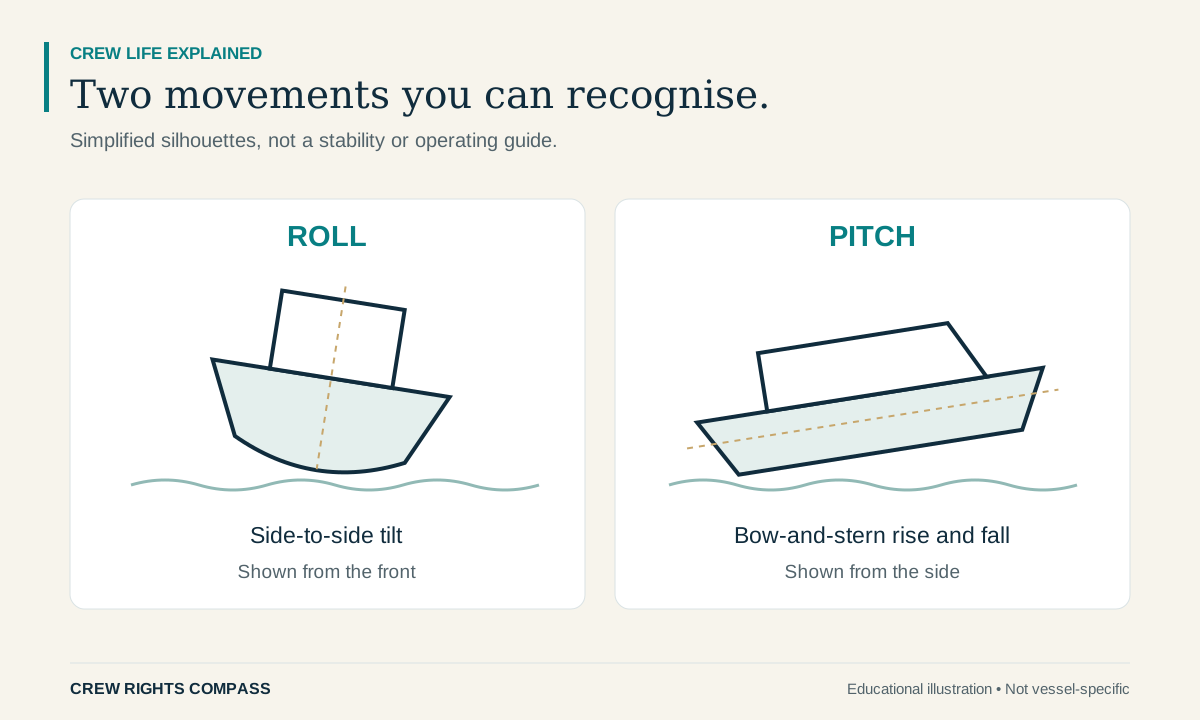
Two movements you can recognise.
- Simplified silhouettes, not a stability or operating guide.
- Roll: side-to-side tilt, shown from the front.
- Pitch: bow-and-stern rise and fall, shown from the side.
Educational illustration; arrangements vary by vessel. Open the full-size diagram: Two movements you can recognise.
Picture a small model ship
Imagine a model on a table. Tip its left and right sides alternately: that illustrates roll. Tip its front and back alternately: that illustrates pitch. Lift the whole model straight up and down: that illustrates heave.
Real movement can combine these motions, so the deck under your feet may not feel like one neat diagram. NOAA’s vessel-motion material distinguishes these movements because measuring orientation and motion matters for work at sea.
Ships, loading conditions, routes and sea conditions differ. A description of how one vessel feels is not a dependable forecast for another vessel or voyage.
A vibration is not a diagnosis
A low hum, a repeating rattle and a sudden change are descriptions. “The propeller is broken” is a conclusion—and usually one you cannot reach from a cabin or corridor.
Marine specialists assess noise and vibration using measurements and investigation; Lloyd’s Register describes that kind of specialist work. The useful role for someone noticing a change is to provide a clear observation through the approved reporting route.
For an illustrative report, compare “Something is wrong downstairs” with “I noticed a new repeating vibration in this corridor at 14:10.” Add the location and circumstances you actually observed, without opening equipment or entering restricted spaces to investigate.
Let the vessel’s instructions lead
Follow onboard guidance about movement, access and securing items within your duties. If a new sensation concerns you, report it; do not rely on a blog, another passenger’s reassurance or a phone recording to decide what it means.
These definitions are for understanding everyday language. They are not stability instruction, equipment guidance or medical advice.
Takeaway: Name the movement, describe the change and let the responsible team assess the cause.
Your next step
Read next
Crew language
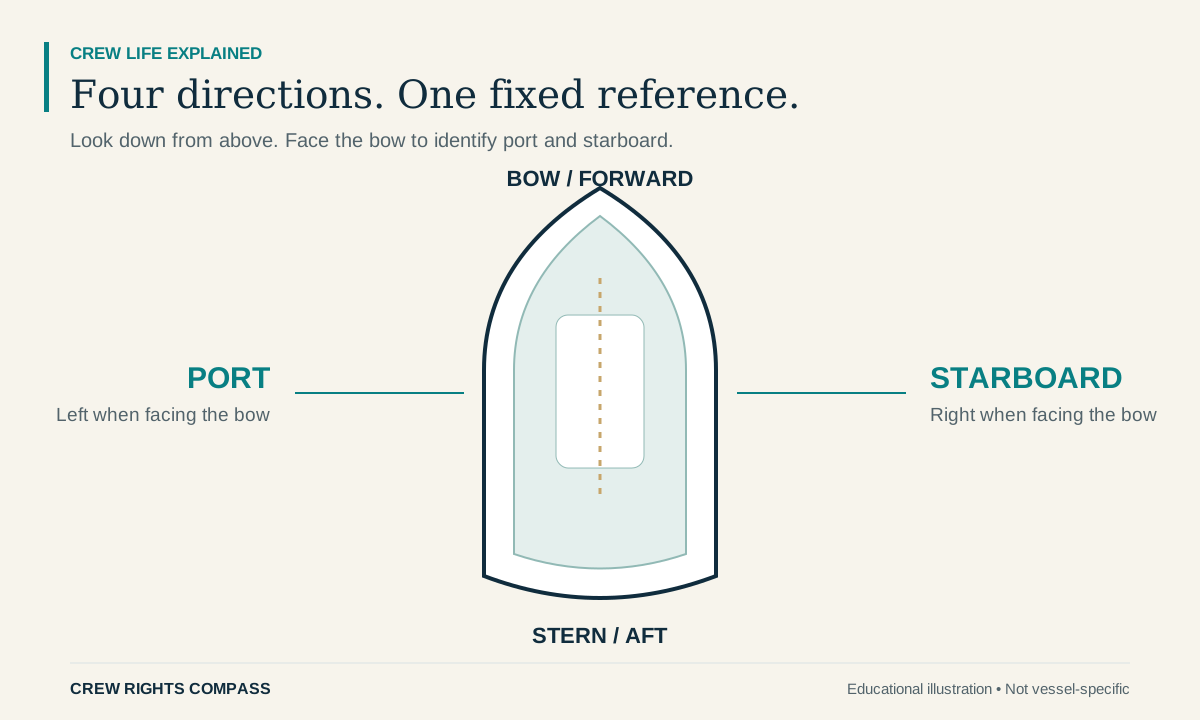
Port, Starboard, Forward and Aft: Find Your Bearings
Your left changes when you turn around. The ship’s port side does not. Learn the fixed reference points that make onboard directions easier to understand.
How ships work
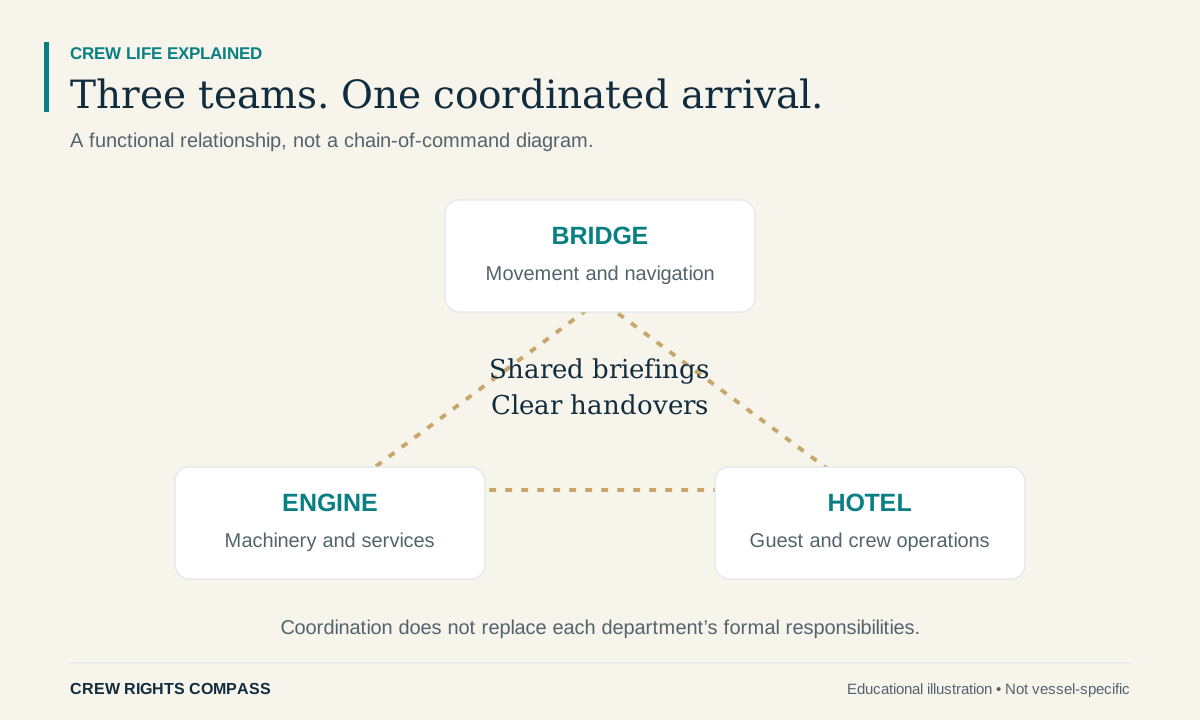
How the Bridge, Engine Room and Hotel Department Work Together
Navigation, technical systems and guest service meet in everyday decisions. Understanding the handovers helps you see how your own job fits into the whole ship.
Sources
- NOAA vessel motion and attitude material. Basic distinction between vessel rotations and translations, including roll, pitch and heave
- Lloyd’s Register noise and vibration services. Noise and vibration assessment uses specialist measurement, analysis and troubleshooting
Sources are references, not endorsements. Examples in this article are illustrative and do not describe a particular company, ship or person. Arrangements vary by employer and vessel: your own ship's instructions come first.
Spotted an error or an out-of-date source? Email a correction. Please do not send personal documents or evidence. See our editorial policy.