Tender Ports Explained: Why Getting Ashore Takes Longer
At some calls, a smaller boat bridges the gap between ship and shore. Weather, capacity, access and the return trip all shape the experience.
Saving is unavailable in this browser (its storage is turned off or full). Ordinary links and bookmarks still work.View saved
A tender port is a call where smaller boats carry people between the ship and shore instead of everyone using a direct ship-to-quay gangway. The transfer is an extra stage in the journey, so getting ashore can take longer than the distance on a map suggests.
The boats, landing arrangements and allocation of services differ by vessel and port. Do not assume every tender is a ship’s lifeboat, or that every company uses the same boarding system.
A short distance, several stages
There may be a waiting point, a boarding process, the boat journey and a shore landing before you reach the place you want to visit. Each stage has its own capacity and arrangements. The return journey needs planning too.
Imagine an illustrative call where the town is visibly close. You may still wait for an authorised departure, then walk or take permitted transport from the landing. “I can see the café” is not a reliable estimate of when you will be back aboard.
For crew, shore access also depends on duties, permission and the operation’s arrangements—not just whether guest boats are running.
Conditions and access matter
Weather and sea conditions can affect a transfer. Seabourn’s accessibility guidance, for example, identifies wind, swell and tidal conditions among factors affecting tender access. That is useful evidence of the issue, not a universal promise about what any particular boat can accommodate.
If you have a mobility or access requirement, ask the operator about the actual vessel, transfer and landing before making plans. Photos of a calm day or another person’s experience cannot confirm suitability for your circumstances.
Do not improvise a transfer or use another operator because the planned service has been paused. Follow the instructions of the responsible onboard team.
Plan both directions
Check where authorised boats leave, which return deadline applies to you and how changes are announced. Confirm whether there are restrictions affecting crew travel. Allow for the process described in the current briefing, rather than guessing from a previous port.
Keep essential return information available without depending entirely on mobile signal. If plans change, use the ship’s designated contact route promptly.
Takeaway: A tender is part of the journey, not a shortcut around ship procedures. Plan the return before enjoying the shore.
Your next step
Read next
How ships work
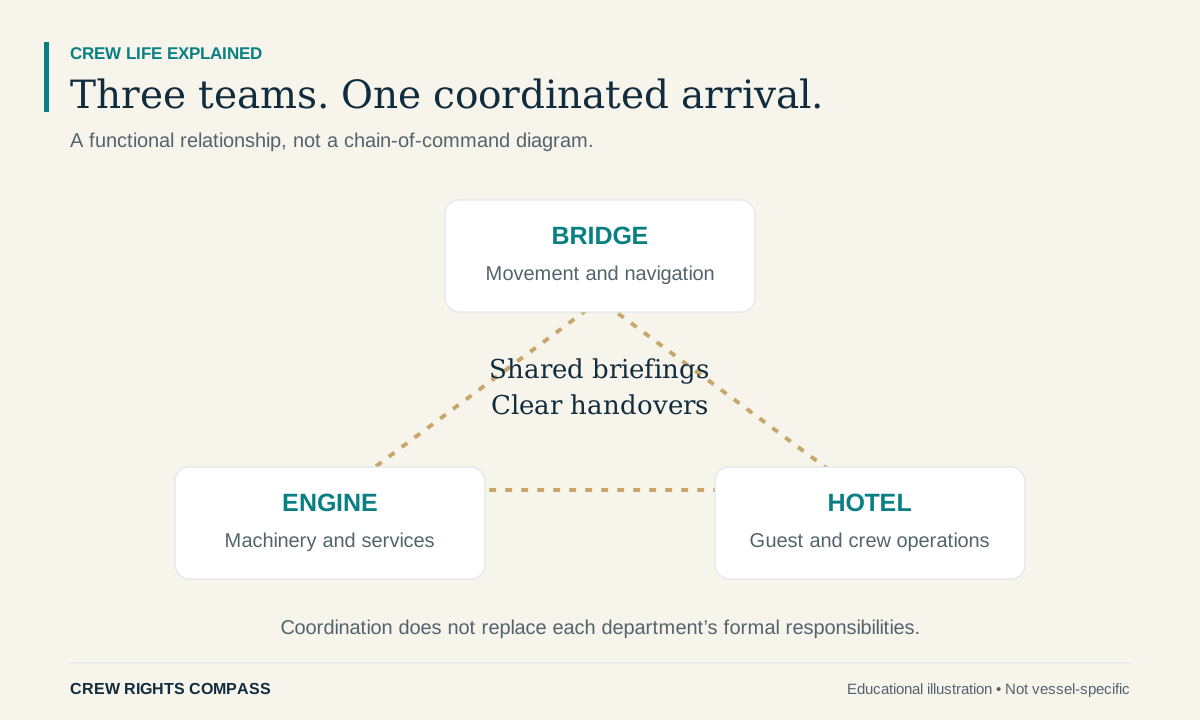
How the Bridge, Engine Room and Hotel Department Work Together
Navigation, technical systems and guest service meet in everyday decisions. Understanding the handovers helps you see how your own job fits into the whole ship.
How ships work
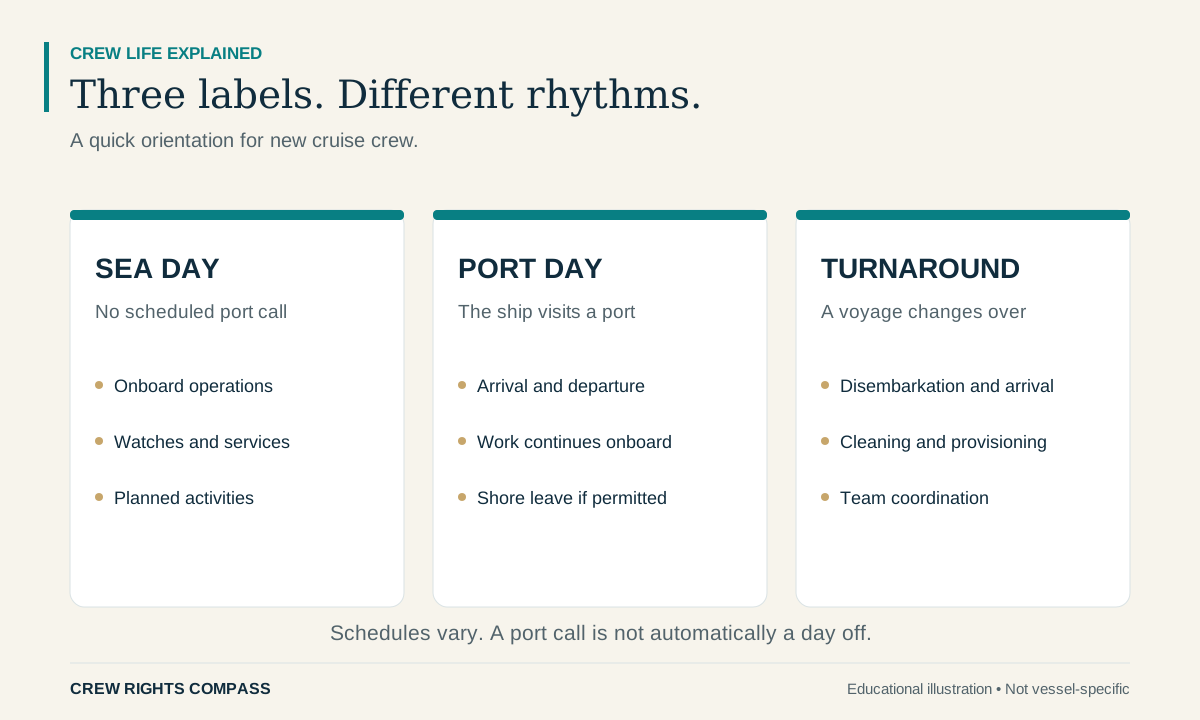
Why Turnaround Day Can Feel Like Three Days in One
One voyage ends while another begins. Follow the overlapping work behind luggage, cabins, supplies and boarding—and learn why small updates can have large effects.
Sources
- Seabourn accessibility information. Tender-transfer access can be affected by weather, swell, tides and shoreside landing conditions; arrangements are operator-specific
Sources are references, not endorsements. Examples in this article are illustrative and do not describe a particular company, ship or person. Arrangements vary by employer and vessel: your own ship's instructions come first.
Spotted an error or an out-of-date source? Email a correction. Please do not send personal documents or evidence. See our editorial policy.